Before anyone schedules a pickup, the same question comes up. How much junk actually fits in a junk removal truck or trailer? Fair question, and a useful one, because most junk removal is priced on space. Knowing roughly how much room your pile will take up helps you estimate cost and skip the surprises.
Here is the real-world version from a local Northwest Arkansas crew. No mystery math, just what a small load, a medium load, and a full load actually look like. Warning up front: the pile is almost always bigger than it looks. They always are.
How junk removal capacity is measured
Most junk removal companies, including us, price jobs based on volume rather than weight. In plain terms, you are paying for how much space your items take up in the truck or trailer, not how many pounds they weigh. There are exceptions for very heavy material like concrete or dirt, but for most household junk, space is the number that matters.
Capacity is usually measured in fractions of a full load. A quarter load, a half load, three quarters, and a full load. It is a simple way to size a job without pulling out a tape measure, and it maps cleanly to what the crew sees when they pull up.
What fits in a typical junk removal truck or trailer
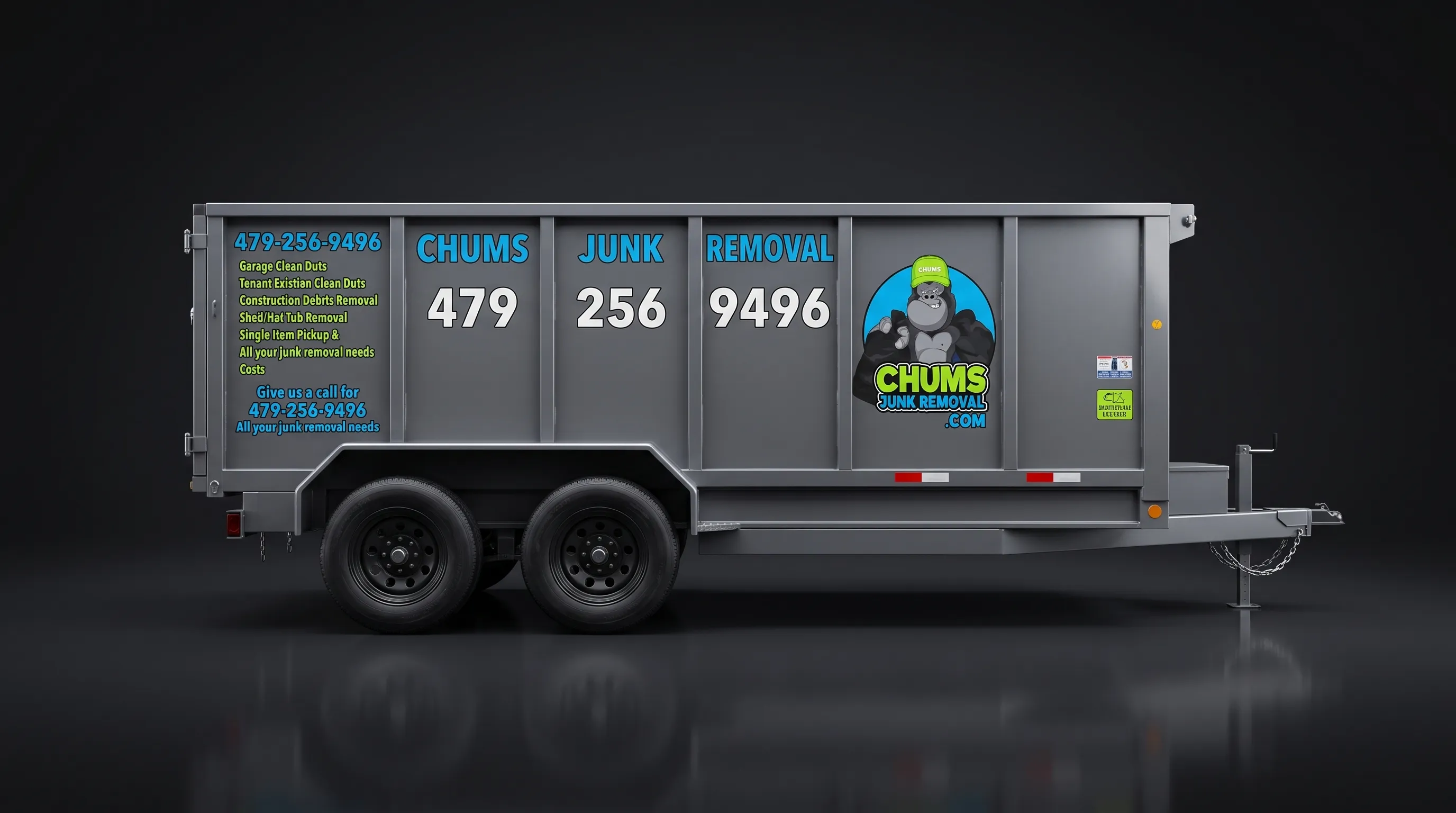
Sizes vary between companies, but most professional junk removal trailers hold somewhere around 12 to 16 cubic yards of material. Cubic yards are hard to picture, so let us translate that into stuff you actually own.
The easiest mental model is the pickup bed. A standard full-size pickup bed is roughly two to two and a half cubic yards. So a full trailer is like stacking several pickup beds' worth of junk into one load. Keep that image handy, because we will come back to it when we estimate your pile.
Quarter load: a small pickup
A quarter load is your small cleanout. It is the quick "we just need a few things gone" job. Typical examples:
- A few pieces of furniture, like a chair and a small dresser
- Several boxes or bags
- A small appliance, like a microwave or mini fridge
- Light yard debris from a small cleanup
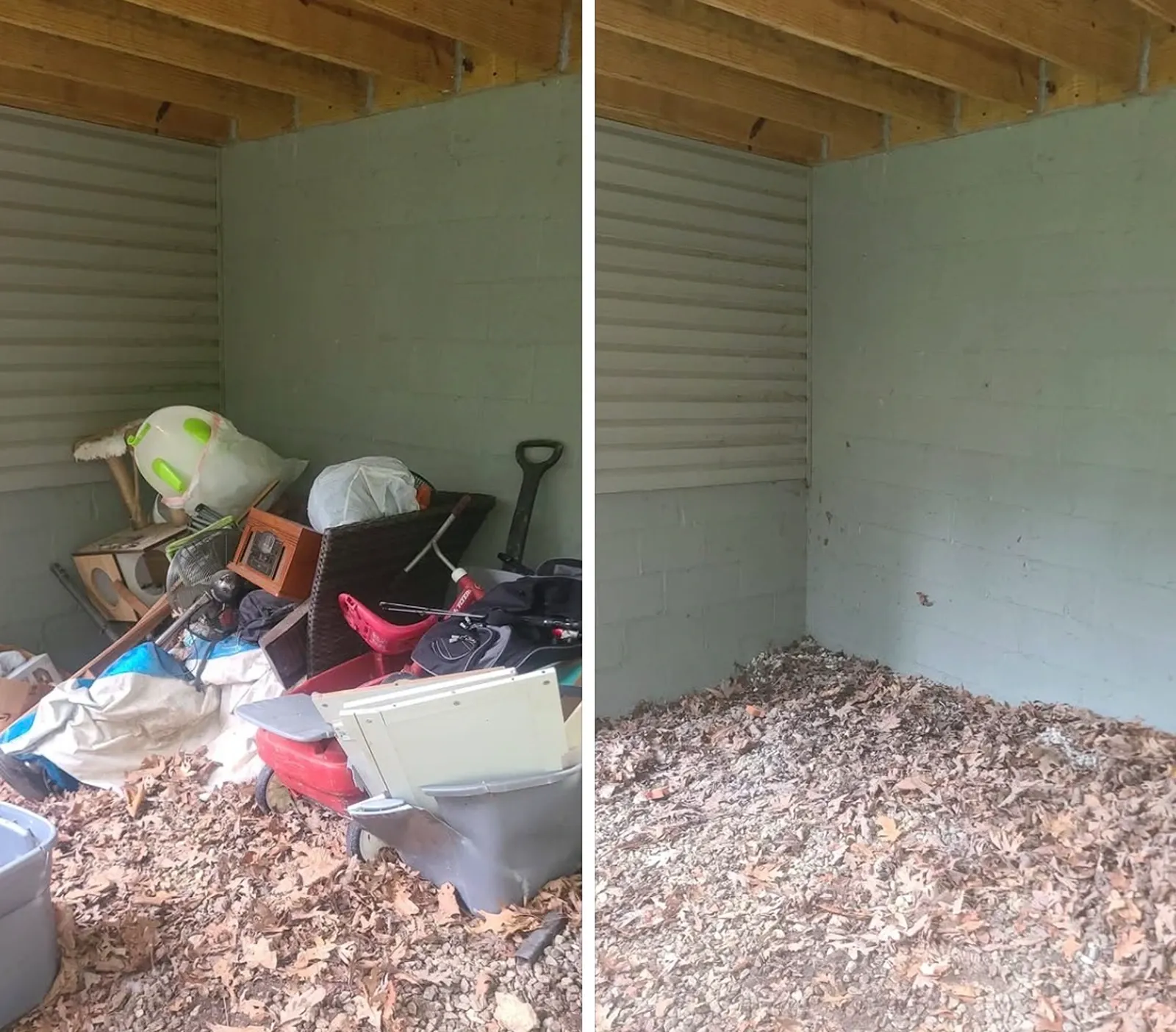
This is common for single-room decluttering or clearing one corner of the garage that has been bugging you. Roughly one pickup bed of space.
Half load: a medium cleanup
A half load is one of the most common job sizes we run. It is usually one space with some bulky items in it. Typical examples:
- A couch and a loveseat
- A mattress and box spring
- Several large furniture pieces
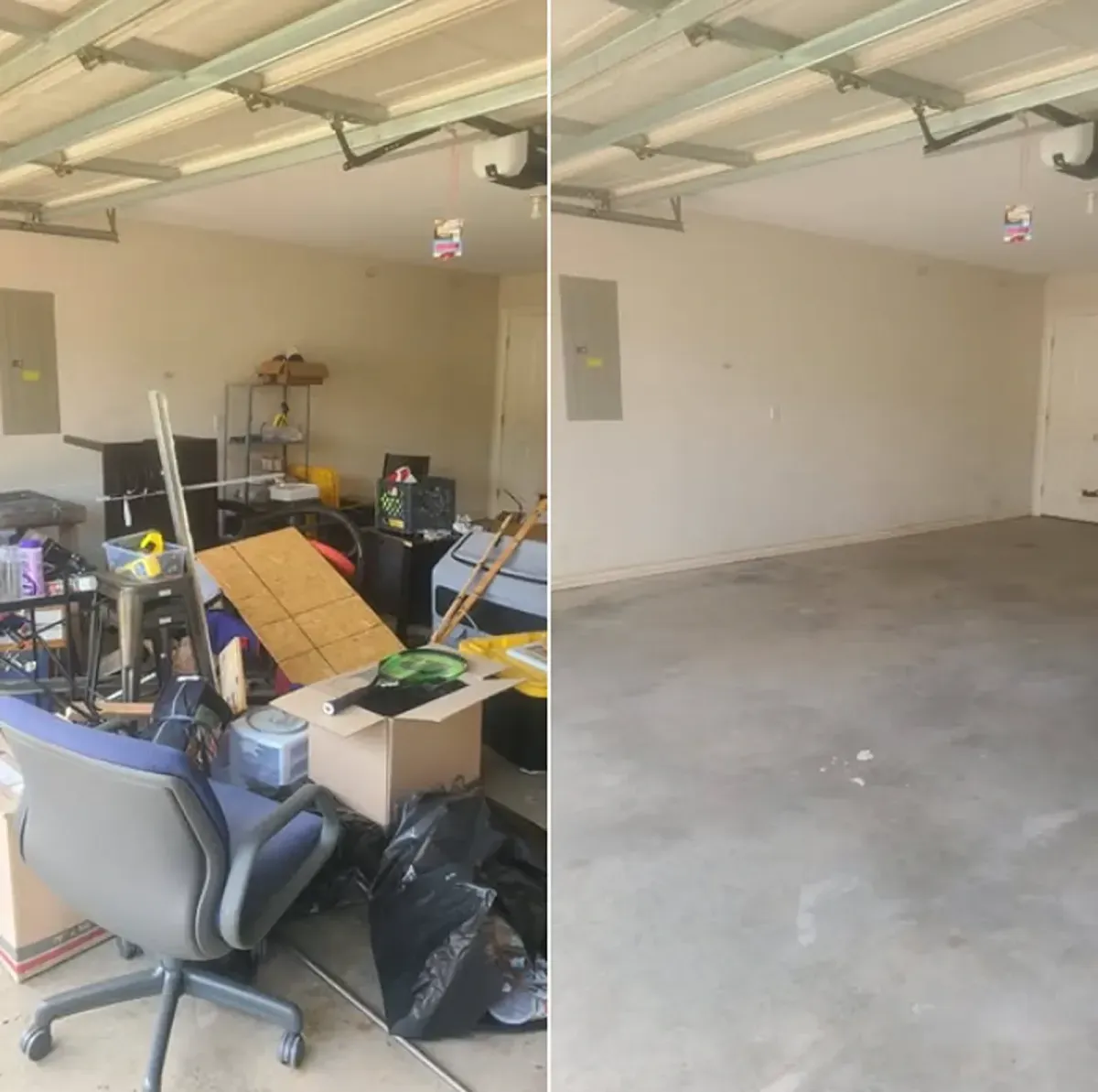
- A partial garage or basement cleanout
- Mixed household junk from one room
If you are clearing out one room with a couple of big items, this is often where you land. Think two pickup beds. This is also where a lot of folks are surprised, because a couch and a mattress alone eat more space than people expect. The old couch had a good run, mostly sitting, and it takes up room right to the end.
Three-quarter load: a large cleanup
A three-quarter load usually means a real cleanout is happening. Typical examples:
- Multiple rooms' worth of furniture
- A large garage or full basement
- Several heavy appliances
- Construction or renovation debris
- Estate or move-out cleanups
At this point, volume adds up fast even when no single item feels huge. It is the pile-of-piles stage. Roughly three pickup beds of space.
Full load: whole-house or heavy debris
A full load is the big one. It takes the whole truck or trailer. Typical examples:
- Whole-house cleanouts
- Estate or property cleanouts
- Large renovation debris
- Several bulky items stacked efficiently
These are the jobs where a space goes from full to empty in one visit. If you are staring at a garage that has quietly become a storage unit, this is probably your zone. If the pile has officially become part of the family, it may be a full load before it asks for a bedroom.
Why junk piles are bigger than they look
Here is the thing that trips almost everyone up. The pile is always bigger than it looks. There are a few reasons:
- Furniture is hollow but bulky, so it hogs space without much weight
- Mattresses take up far more room than people expect
- Odd shapes do not stack neatly, so air gaps waste space
- Items you forgot about turn up mid-load, every time
What looks like "just a few things" has a habit of becoming half a load once it is actually stacked. This is not us padding the estimate. It is just geometry, and geometry does not negotiate.
How to estimate your load before booking
You do not need to be exact. A rough read is plenty to get a ballpark. Use the pickup bed trick:
- One pickup bed of junk is about a quarter load
- Two pickup beds is about a half load
- Three pickup beds is about a three-quarter load
- Four or more is heading toward a full load
Picture your pile filling the bed of a truck, then multiply. It gets you close. For anything past that, a photo does the rest. A photo usually explains it better than three paragraphs of "it's not that much," and it lets us give you a real number instead of a guess.
Why capacity matters for your price
Because junk removal is volume-based, the space your items take up is the biggest driver of cost. That means a few things work in your favor:
- More space used means a higher price, so knowing your load sets expectations
- Efficient loading helps, which is what the crew is trained to do
- Grouping items together makes the job faster and the estimate cleaner
Knowing your approximate load helps you avoid surprises and decide whether a job is worth hiring out or small enough to handle yourself. For the full pricing picture, see our junk removal cost guide for Northwest Arkansas.
When a small load is not worth hiring out
Honest note. If your load is a single small item you can safely lift and drop off yourself, you probably do not need a crew. Save your money. Junk removal earns its keep when the load is bulky, heavy, spread out, or full of things that need special handling. Rule of thumb: if it takes three people and a prayer to move it, that is not weakness. That is geometry, again.
What we handle across Northwest Arkansas
Whatever the load size, the common jobs are the same across Bentonville, Rogers, Springdale, Fayetteville, and nearby areas: furniture removal, appliance removal, garage cleanouts, and general household junk. You point at the pile, whatever size it is, and we size it up honestly.
Common questions
Is junk removal priced by weight or volume?
Mostly volume, meaning how much space your items take up. Very heavy materials like concrete or dirt can be an exception.
How big is a full trailer?
Most professional junk removal trailers hold around 12 to 16 cubic yards, which is several pickup beds' worth of space.
How do I know what load size I have?
Picture your junk filling a pickup bed and multiply. For a precise read, send a photo and we will size it for you.
Why did my load turn out bigger than I thought?
Furniture is bulky, mattresses eat space, and odd shapes do not stack tight. Piles almost always take more room than they look like they will.
Not sure how big your load is?
Call or text 479-256-9496, or send a photo and we will size it up and tell you what it costs.
Request a price estimate Call or text 479-256-9496