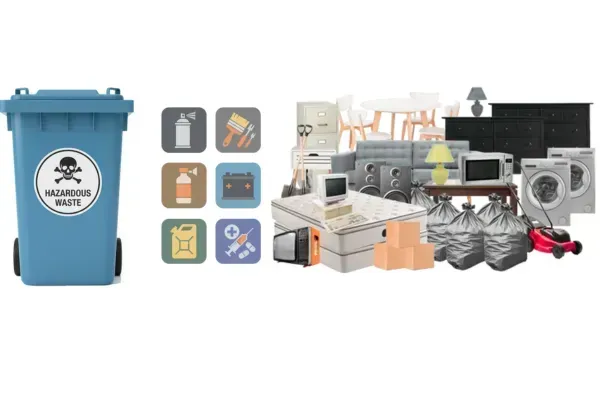
Before anyone books a pickup, the same question comes up. What can you actually take, and what can you not take? It is a good one to ask up front, because knowing the answer saves everyone a wasted trip and a surprise on service day.
Here is the plain breakdown from a local Northwest Arkansas crew. Most household and business items are no problem. A handful of things are off-limits for safety, legal, or environmental reasons, and those are the ones worth knowing about ahead of time. We will keep it honest and skip the fine-print games.
What junk removal companies commonly take
Most junk removal focuses on non-hazardous household and commercial items. If it came out of a home, garage, yard, or office and it is not on fire or full of chemicals, odds are it can go. Here are the usual categories.
Furniture and household items
The bread and butter of junk removal. Common accepted items:
- Couches, chairs, tables, and dressers
- Mattresses and box springs
- Bed frames and shelving
- Rugs and carpet
- Boxes, bags, and general clutter
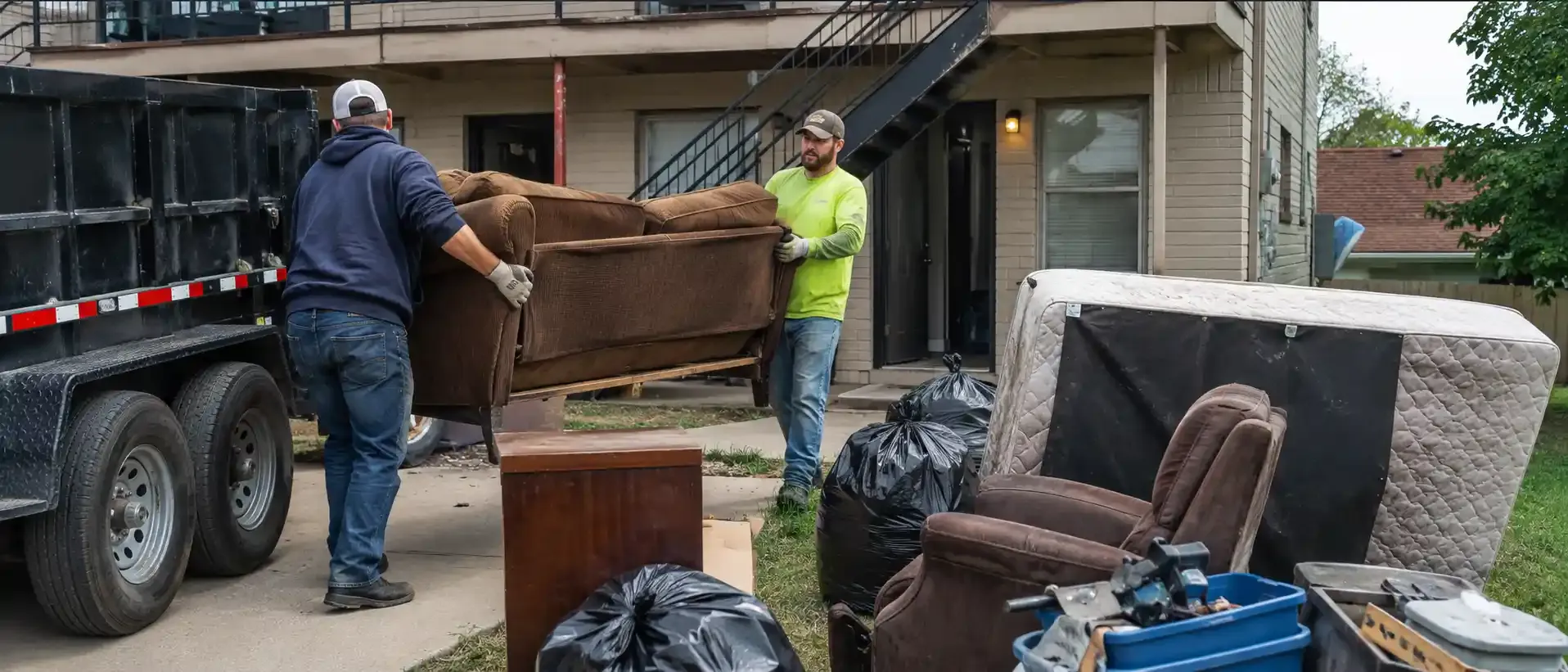
If you are clearing out several pieces, furniture removal handles the lifting and hauling in one go. The old couch had a good run, mostly sitting. We will take it from here.
Appliances
Most standard appliances are accepted, including:
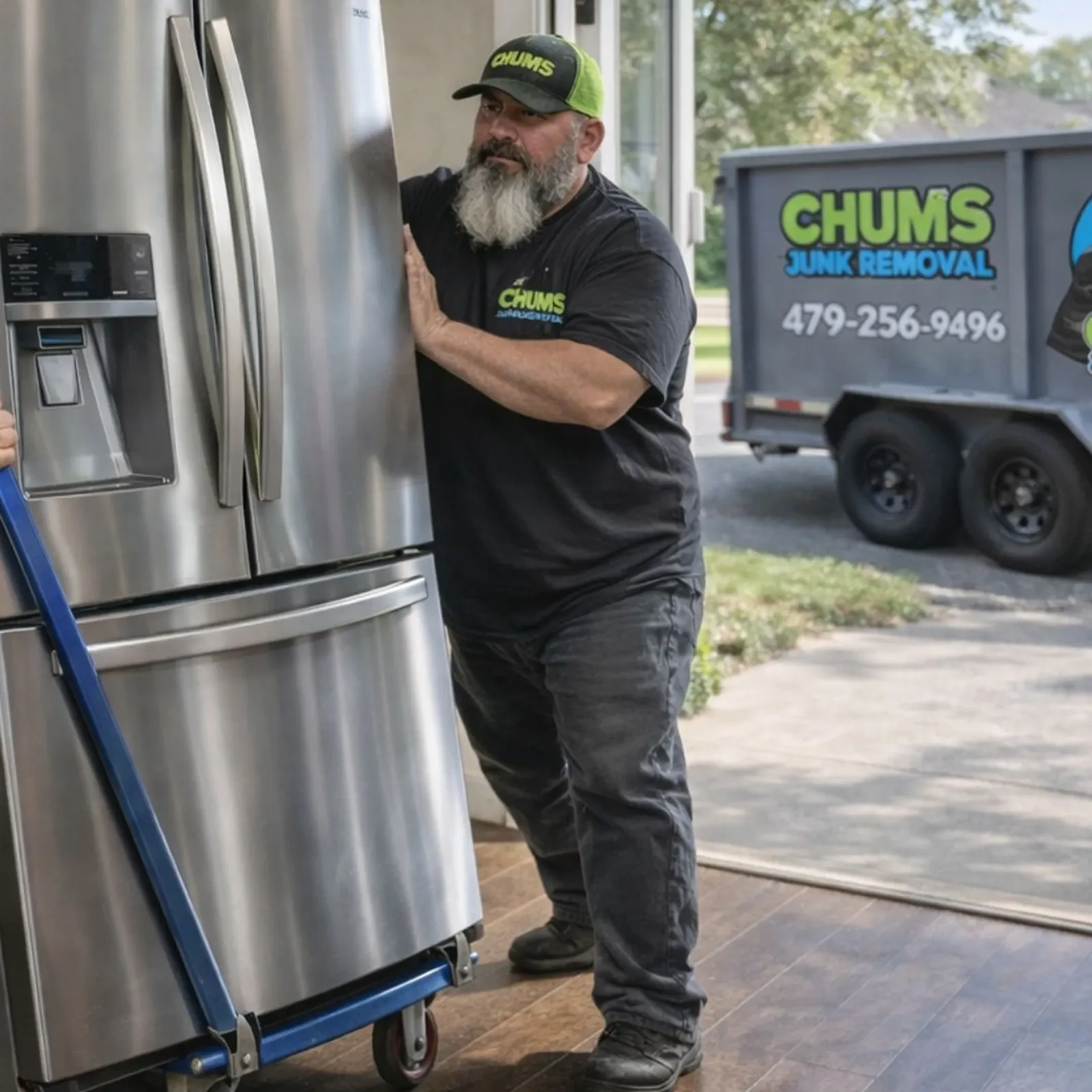
- Refrigerators and freezers
- Washers and dryers
- Ovens and stoves
- Dishwashers
- Microwaves and water heaters
A few appliances may require special handling based on local facility rules, especially fridges and freezers. That is not a problem, it just helps to mention it when you book. More on appliance removal and disposal.
Electronics
Many junk removal companies take electronics, such as:
- Televisions
- Computers and monitors
- Printers and office equipment
- Small electronics
Electronics are often handled separately from regular trash, and some can be recycled when possible, depending on the item and local options.
Yard debris
Typical yard waste we can handle:
- Branches and limbs
- Leaves and brush
- Old fence panels
- Small landscaping debris
After a good Northwest Arkansas storm, the backyard can start looking like it hosted a wrestling match between tree limbs and a patio set. That is what yard debris removal is for.
Construction and renovation debris
Accepted materials often include:
- Drywall
- Wood scraps
- Flooring
- Cabinets and fixtures
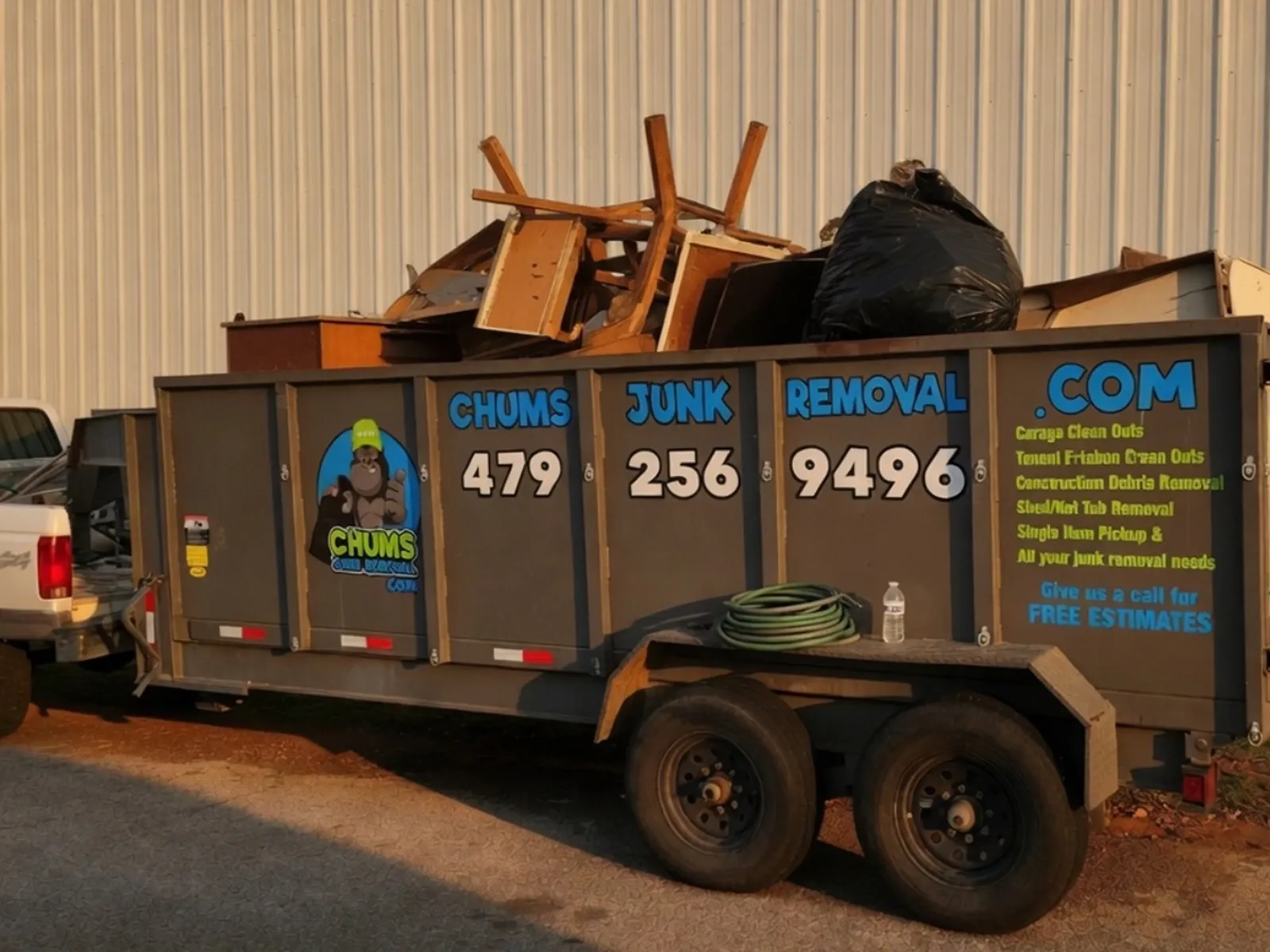
Construction debris is usually priced on volume and weight, since it gets heavy fast. See construction debris removal for that side of things.
What junk removal companies generally cannot take
Certain items are restricted because of environmental laws, safety risks, or disposal facility rules. These are not arbitrary rules. They exist to keep crews, customers, and the local environment safe. Here is what usually cannot go on a standard junk removal truck.
Hazardous materials
Most companies cannot remove:
- Paints, solvents, and stains
- Chemicals and cleaning agents
- Pesticides and herbicides
- Asbestos-containing materials
These need specialized hazardous waste disposal, and honestly you want a specialist on those, not a couch crew.
Flammable or explosive materials
Typically prohibited:
- Gasoline and fuel containers
- Propane tanks
- Fireworks
- Ammunition
These pose real safety risks during transport, so they are a hard no for good reason.
Medical and biohazard waste
Generally cannot be accepted:
- Medical sharps and needles
- Biohazard materials
- Pharmaceutical waste
These have to be handled by licensed medical waste providers.
Automotive fluids and parts
Restrictions usually apply to:
- Motor oil and transmission fluid
- Car batteries
- Loose automotive fluids
Some auto parts may be accepted if properly drained, depending on local rules. When in doubt, ask first.
Why some items are restricted
The restrictions are not there to make life difficult. They exist to:
- Protect workers and customers from injury or exposure
- Comply with local and federal regulations
- Prevent environmental contamination
- Keep transport and disposal safe and legal
A responsible junk removal company follows these rules rather than tossing something questionable on the pile and hoping for the best. It is the difference between doing the job right and creating a bigger problem down the road.
What happens to the items that can go
Once items are picked up, they are sorted based on what they are and their condition. Some things can be reused or recycled when possible, and the rest is disposed of properly based on local facility rules. We will not claim everything gets recycled or donated, because that is not how it works. We covered the full version in what happens to your junk after we haul it.
What to do if you are unsure about an item
If you are not sure whether something can be removed, do not guess. A quick check up front keeps service day smooth:
- Ask when you schedule
- Send a photo of the item
- Mention any chemicals, fluids, or unusual materials in advance
A photo usually explains it better than three paragraphs of "it's this old tank thing in the corner." Clear communication means accurate pricing and no surprises when the crew arrives.
When you might not need us
Honest note. If you have one small item you can safely handle and drop off yourself, you probably do not need to hire anyone. Save your money. Junk removal earns its keep when the load is bulky, heavy, spread out, or full of things that need proper handling. Rule of thumb: if it takes three people and a prayer to move it, that is not weakness. That is geometry.
Serving Northwest Arkansas
We handle accepted household and commercial items across Bentonville, Rogers, Springdale, Fayetteville, Bella Vista, Pea Ridge, and nearby areas. Being local means you get a straight answer about what can and cannot go, from a crew that knows the local disposal rules. See all our junk removal services.
Common questions
Do junk removal companies take refrigerators?
Yes. Refrigerators and freezers are accepted, though they may require special handling based on local facility rules. Mention it when you book.
Can you take paint or chemicals?
Generally no. Paints, solvents, and chemicals are hazardous materials that need specialized disposal.
What about old TVs and electronics?
Yes, most electronics are accepted. Some can be recycled when possible, depending on the item and local options.
How do I know if my item is allowed?
Send a photo and ask when you schedule. Flag any chemicals, fluids, or unusual materials so there are no surprises on service day.
Not sure if we can take it?
Call or text 479-256-9496, or send a photo and we will tell you what we can haul.
Request a price estimate Call or text 479-256-9496